Owned case study
SealSend Event Planning App
An invitation, guest-response and organizer workflow in one web app
Owned product in controlled beta. This case study describes the public source reviewed on 25 October 2026. Paid checkout is disabled during the beta; customer adoption, revenue and time savings have not been established here.
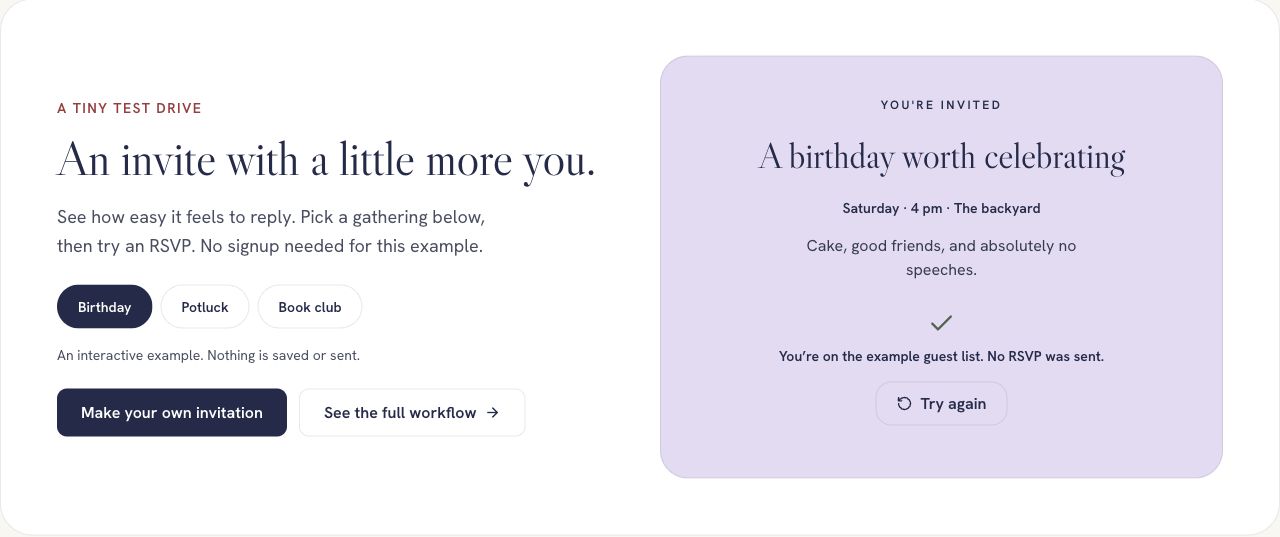
From event idea to guest list
Step 1
Prepare the event
Start with event details or a draft, then review missing information and assumptions.
Step 2
Review and share
Preview the invitation and confirm what guests will see before sharing it.
Step 3
Collect replies
Guests respond from an event link; the organizer works with the response and guest lists.
Step 4
Run the event
Use the check-in workflow and connect event updates to other tools through documented webhooks.
The challenge
Event planning spans several different jobs: preparing an invitation, collecting replies, keeping a guest list current and coordinating a team. SealSend brings those jobs into a shared web application while letting guests reply from a public event link without an account.
Approach
- Designed separate paths for hosts, guests and organizers, rather than making every person use the same administration screens.
- Connected event details, invitations, RSVP responses and check-in through a shared data model.
- Kept generated event content as a draft: missing information and assumptions are surfaced for review, with schema validation and a non-AI fallback.
- Added workspace roles, client review links and signed webhook events for connections to other business tools.
What was delivered
- Event setup and invitation preview flow
- Guest replies and response management
- Organizer workspaces and client review links
- QR check-in and a manual guest-list path
- Structured AI event drafts with explicit unknowns
- Documented, signed webhook integrations
Evidence and limits
- • The public repository credits Cameron Ashley and publishes the application source under AGPL-3.0-only.
- • Source review confirms a versioned AI draft schema, explicit missing-information fields and assumptions that require confirmation.
- • The event-draft API validates inputs and generated output, applies usage limits and falls back when generation fails.
- • The repository contains automated draft-validation tests and webhook documentation. These are source observations, not a claim that the full product test suite or live provider delivery was verified in this review.